Gut Healing Starter Guide: How to Reset Your Gut and Start Feeling Like Yourself Again
Introduction: Your Symptoms May Not Be Random
“Your symptoms are not random. They are signals from your body asking for support, not punishment.”
Bloating. Low energy. Cravings. Hormonal swings. Mood changes. That heavy, uncomfortable feeling after meals.
A lot of people treat these as separate problems.
But very often, they are connected to one thing: your gut is out of balance.
Your gut does much more than digest food. It can affect your energy, cravings, inflammation, hormones, mood, and how your body feels day to day.
So when your gut is off, everything can feel off.
And when your gut is supported, your body often starts to feel more stable again.
This guide is not about extremes. It is not about cutting out everything, starting five supplements, or following a random protocol from the internet.
This is a simple starting point.
The goal is to give your digestive system less stress, more support, and enough consistency to begin noticing what your body actually needs.
Why Gut Health Matters
“When your gut is overwhelmed, your energy, cravings, mood, and digestion can all feel off at the same time.””
Your gut is one of the main systems your body uses to break down food, absorb nutrients, eliminate waste, communicate with your immune system, and support your overall balance.
When digestion is not working well, you may feel it in many ways:
You may feel bloated after meals.
You may feel tired even when you eat “healthy.”
You may crave sugar or simple carbs.
You may feel heavy, inflamed, or uncomfortable.
You may notice irregular bowel movements.
You may feel like your hormones or mood are all over the place.
That does not always mean something is seriously wrong.
But it does mean your body is giving you signals.
The first step is not panic.
The first step is awareness.
Step 1: Remove the Biggest Gut Triggers for 10 Days
“This is not about restriction. It is about giving your gut a quieter environment so you can finally hear what your body is telling you.”

Start simple.
For the next 10 days, remove the biggest common triggers that often make digestion harder:
Added sugar
Alcohol
Ultra-processed foods
Excess caffeine
This is not forever.
This is not a punishment.
This is a short reset to give your gut more space to calm down.
Many people jump into complicated gut protocols too quickly. But sometimes the body does not need more complexity. It needs fewer irritants, less overload, and more consistency.
Think of this step as creating a cleaner environment for your digestive system.
You are not trying to be perfect.
You are trying to reduce the biggest things that may be keeping your gut irritated, inflamed, or overstimulated.
Step 2: Simplify Your Meals
“Simple food is not boring. Simple food is often exactly what an overwhelmed digestive system needs.”

Your gut often heals faster when digestion is easier.
That means simple meals can be very powerful.
For a short reset period, focus on meals that are warm, cooked, balanced, and easy to digest.
A simple gut-supportive meal should include:
Protein to support tissue repair and blood sugar balance.
Fiber to feed your microbiome and support regular digestion.
Healthy fats to support hormones, fullness, and steady energy.
Here are a few simple examples:
Eggs with cooked vegetables and olive oil
Chicken with rice and cooked vegetables
Fish with greens and avocado
Soup with protein, vegetables, and healthy fat
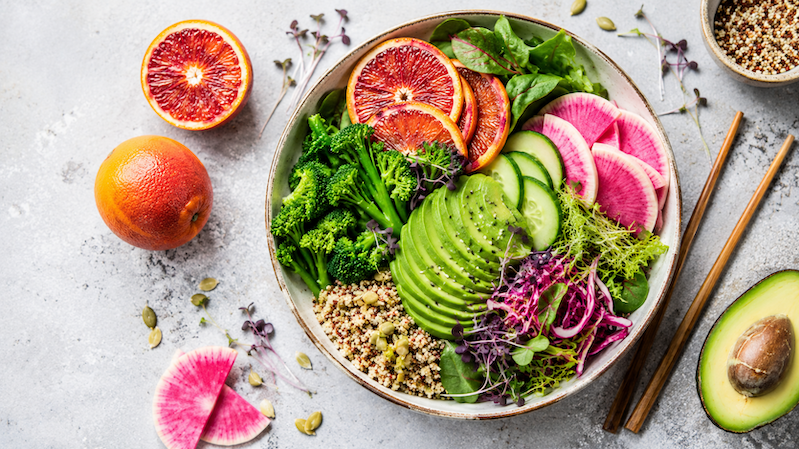
A warm bowl with quinoa, vegetables, and olive oil
This does not have to be fancy.
In fact, the simpler the better.
During a gut reset, your body does not need complicated recipes. It needs food it can recognize, digest, and use.
Step 3: Add Gentle Gut Support
“You are not trying to attack your body. You are trying to rebuild balance.”

This is where many people make a mistake.
They start taking too many supplements, too many probiotics, too many powders, or too many “gut healing” products at once.
But your body does not always need more.
Sometimes it needs gentle support.
Start with the basics:
Fermented foods, if tolerated
Examples: sauerkraut, kefir, yogurt, fermented vegetables.
Prebiotic foods
Examples: garlic, onion, asparagus, leeks, cooked and cooled potatoes or rice if tolerated.
Hydration
Water matters, but minerals matter too. If you are dehydrated or low in electrolytes, digestion and elimination can feel harder.
The goal is not to “kill everything.”
The goal is to rebuild balance.
Your gut is an ecosystem. It needs support, not aggression.
If fermented foods make your bloating worse, start very small or pause and observe. More is not always better.
Step 4: Observe Your Body
“Awareness is where real change starts. Not guessing. Not fear. Just listening.”

This is where real change happens.
Not from guessing.
Not from fear.
Not from copying someone else’s diet.
From awareness.
For the next 10 days, pay attention to:
Bloating
Energy
Cravings
Stool
Mood
Sleep
How you feel after meals
You can write this down in a simple journal or notes app.
Ask yourself:
What meals make me feel calm and satisfied?
What foods make me feel bloated or tired?
Do I crave sugar more after certain meals?
Do I feel better with cooked foods than raw foods?
Do I feel worse when I eat too fast or under stress?
This step is important because your body gives feedback.
Most people ignore that feedback until symptoms get louder.
A gut reset helps you slow down enough to listen.
Step 5: Support Your Lifestyle
“Gut healing is not only what you eat. It is also how you eat, how you sleep, and how safe your body feels.”

Gut health is not just food.
You can eat the cleanest meals in the world, but if you are stressed, rushed, sleep-deprived, and eating while distracted, your digestion may still struggle.
Your nervous system and digestive system are deeply connected.
When you are stressed, your body is not focused on digestion. It is focused on survival.
So during your gut reset, pay attention to three lifestyle areas.
Stress
Chronic stress can disrupt digestion.
Try simple practices:
Walk after meals
Take a few deep breaths before eating
Slow down your schedule where possible
Spend time outside
Avoid eating while angry, anxious, or rushing
You do not need a perfect meditation routine.
You just need moments where your body feels safe enough to digest.
Sleep
Poor sleep can affect cravings, blood sugar, hunger signals, and gut repair.
Try to create a simple sleep rhythm:
Go to bed around the same time
Reduce screens before bed
Avoid heavy late-night meals
Keep your room cool and dark
Get morning light when possible
Better sleep often makes better food choices easier.
Eating Habits
How you eat matters.
Try this:
Eat slower
Chew your food well
Sit down when you eat
Avoid eating while stressed
Stop multitasking during meals
Digestion begins before food reaches your stomach.
When you slow down, your body can prepare for digestion better.
What You May Notice in 1–2 Weeks
Everyone is different, and results vary.
But within the first 1–2 weeks of removing major triggers, simplifying meals, and supporting digestion, many people begin to notice changes like:
Less bloating
More stable energy
Fewer cravings
Better digestion
Less heaviness after meals
More awareness of food triggers
This is not magic.
This is your body responding to less stress and more support.
A short gut reset will not fix every deeper issue overnight, but it can show you what direction your body wants to move in.
What Not to Do
A gut reset should feel supportive, not extreme.
Avoid these common mistakes:
Starting multiple supplements at once
If you start five new things at the same time, you will not know what is helping and what is causing symptoms.
Start simple.
Over-restricting your diet
Cutting out too many foods can create stress, fear, and nutrient gaps.
The goal is not to eat less and less.
The goal is to eat in a way your body can digest and use.
Following random protocols online
Your body is not the same as someone else’s body.
What worked for them may not work for you.
Ignoring stress and lifestyle
Food matters. But sleep, stress, movement, and eating habits matter too.
Gut healing is not only about what is on your plate.
It is also about how your body feels when you eat it.
When the Root May Be Deeper
This starter guide is a beginning.
But if symptoms continue, the root may be deeper.
Some people may need more personalized support around:
Gut imbalance
Microbiome issues
Candida patterns
Parasites
Food sensitivities
Hormonal connections
Chronic inflammation
Stress-related digestion issues
This is where personalized work matters.
Because at some point, guessing becomes exhausting.
You do not need another random protocol.
You need clarity.
Book Free Consult
-
Book Free Consult -
“Sometimes you do not need more information. You need structure, support, and a clear plan.”
This starter guide is a great first step.
B ut sometimes reading the information is not enough.
You may know what to do, but still feel confused about where to start, what to eat, what to avoid, or how to stay consistent when life gets busy.
That is where coaching helps.
My 2-Week Detox & Food Reset Program is designed to help you reset your food habits, support digestion, reduce bloating, improve energy, and feel more in control of cravings — without extreme dieting or guessing.
This is not a starvation cleanse.
This is not a quick-fix detox tea.
This is a guided food reset that helps your body get back to simple, nourishing basics.
Inside the program, you get:
A simple 2-week meal plan
Breakfast, lunch, and dinner ideas
Grocery lists
Easy recipes
Bonus recipe ideas
Guidance on what to remove and what to add
Support with food choices and substitutions
Coaching support so you are not doing it alone
“The goal is not to eat less. The goal is to help your body digest better, feel lighter, and trust food again.”
The goal is to make your digestion easier, calm down the overload, and help you understand what foods actually work for your body.
Many people also notice they feel lighter, less bloated, and may lose some weight during the first week, but weight loss is not the main promise. The main focus is digestion, energy, cravings, food habits, and helping your body feel supported again.
If you feel like your gut is off, your cravings are controlling you, or your energy crashes after meals, this program gives you structure.
No guessing.
No random protocols.
No overwhelm.
Just simple steps, real food, and support.
Final Thoughts: You Don’t Need a Perfect Diet
You do not need to be perfect to support your gut.
You need awareness.
You need consistency.
You need the right steps for your body.
Your body already knows how to heal.
Your job is to stop overwhelming it and start supporting it.
Begin with 10 days.
Remove the biggest triggers.
Simplify your meals.
Add gentle support.
Observe your body.
Support your lifestyle.
And if you want to understand what is actually happening in your body and build a step-by-step plan, I can help you map it out.
No guessing.
No overwhelm.
Just clarity.
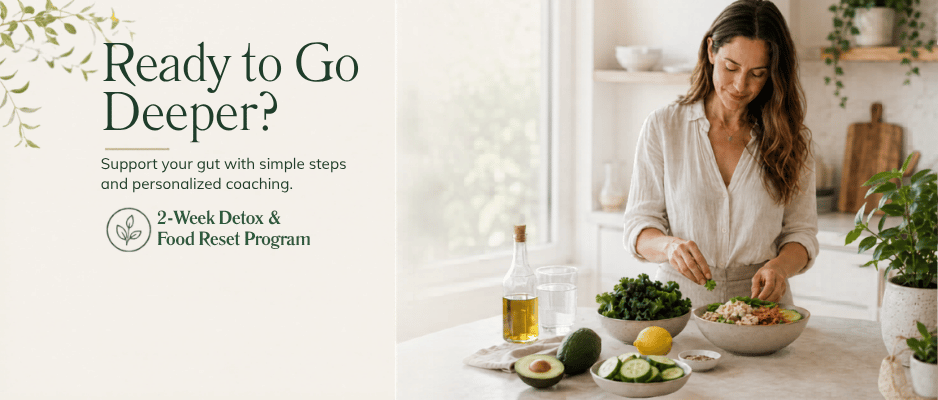
Ready to Go Deeper?
If you struggle with bloating, cravings, low energy, digestive discomfort, or feeling like your body is “off,” you do not have to figure it out alone.
The Gut Health Program is a guided way to reset your meals, support your gut, and start understanding what your body needs.
You do not need a perfect diet.
You need awareness, consistency, and the right steps.
Book a free Consultation and let’s map out what may be going on in your body and whether the Detox & Food Reset Program is the right next step for you.
“You do not need a perfect diet. You need the right steps, repeated consistently.”
A supportive 14-day food reset created to help you feel lighter, reduce cravings, improve digestion, support hormone balance, and rebuild a healthier relationship with food — together with a small group of women on the same journey.
This is not an extreme detox. It is a guided reset focused on real meals, simple structure, daily support, and small habits that help your body feel more balanced.
“Your body already knows how to heal. Your job is to stop overwhelming it and start supporting it.”
FAQs
-
Some people begin to notice small changes within 1–2 weeks, especially when they remove common triggers like added sugar, alcohol, ultra-processed foods, and excess caffeine. You may feel less bloated, have more stable energy, or notice fewer cravings. Results vary from person to person, and deeper gut issues may take longer.
-
No. A perfect diet is not the goal. Your gut usually needs consistency, simple meals, less overload, and better awareness. Start with warm, cooked, balanced meals that include protein, fiber, and healthy fats. Small daily changes are often more realistic than extreme rules.
-
For a simple 10-day reset, start by removing added sugar, alcohol, ultra-processed foods, and excess caffeine. These are common triggers that may make bloating, cravings, and energy crashes worse. This does not have to be forever. It is a short reset to help your body calm down and give you better feedback.
-
Fermented foods like sauerkraut, kefir, yogurt, and fermented vegetables can support gut health for many people, but not everyone tolerates them well at first. If they make you feel more bloated or uncomfortable, start with a very small amount or pause and observe your body. More is not always better.
-
The main focus of the program is digestion, energy, cravings, bloating, and food habits. Some people may feel lighter or lose some weight, especially during the first week, but weight loss is not guaranteed. The goal is to support your body with simple meals, structure, and coaching instead of extreme dieting.
-
Yes, it can support weight loss for some people, especially if bloating, cravings, overeating, poor food habits, or energy crashes are part of the struggle.
The main focus of the program is not extreme dieting. The focus is digestion, energy, cravings, bloating, food habits, and learning how to build simple meals that support your body.
Many people may feel lighter within the first week, and some may lose weight as their body responds to cleaner meals, less sugar, less ultra-processed food, and more structure.
Weight loss results vary from person to person, but the program is designed to help your body feel less overwhelmed and more supported — without starving, guessing, or following extreme rules.
Disclaimer: This content is for educational purposes only and is not medical advice. Alex Krasovsky Wellness provides health coaching, not medical diagnosis or treatment. Always speak with your healthcare provider before making major dietary changes, starting supplements, or treating a medical condition.