How Much Water Should I Drink a Day? A Simple Hydration Guide for Energy, Cravings, and Digestion
Most people think hydration is simple: “Just drink more water.”
But if that were true, so many people wouldn’t still feel tired, bloated, dry, constipated, or crave sweets after meals — even when they carry a water bottle all day.
The real question is not only how much water should I drink a day.
The better question is: Is your body actually using the water well?
“Hydration is not just about how much water you drink. It is about how your body responds to it.”
If you feel tired, bloated, constipated, dry, or constantly pulled toward sweets after meals, your hydration routine may need a smarter strategy.
Inside my Group Detox & Weight Loss program, I teach you how to drink water the right way for your body, digestion, cravings, energy, and
weight-loss goals.
Book a free consult to see if the program is a good fit for you.
Why Hydration Matters More Than Most People Think
Water is not just something you drink when you feel thirsty. Your body uses fluid for digestion, circulation, energy, bowel movements, and many daily functions. When hydration is low, you may still function, but you may not feel your best.
You may notice:
Low energy
Dry mouth
Headaches
Constipation
Bloating
Heavy digestion
Sugar cravings after meals
Feeling hungry when you are not really hungry
“Before blaming willpower, cravings, or metabolism, look at the basics first. Hydration is one of them.”
This does not mean every symptom is caused by dehydration. But hydration is one of the first foundations worth checking before blaming your willpower, your metabolism, or your cravings.
The Problem With “Just Drink More Water”
“Drink more water” sounds helpful. But for many people, it is too basic.
They drink water all day and still feel dry.
They drink a lot at night and wake up to use the bathroom.
They drink water with meals and feel bloated.
They drink coffee first, water later, and wonder why their energy crashes.
They search for how to drink more water, how to stay hydrated, best time to drink water, when to drink water, and how to drink water correctly — but still feel confused.
That is because hydration is not only about quantity. It is also about timing, minerals, digestion, lifestyle, and body signals.
“More water is not always better. A better rhythm is what many people are missing.”
This is exactly why I teach hydration inside my Group Detox & Weight Loss program instead of giving people another generic rule.
How Much Water Should I Drink Based on Weight?
Many people search for how much water should I drink based on weight or try a water intake calculator. Those tools can give you a general idea, but they are not the full answer.
Your needs can change based on:
Activity level
Sweating
Climate
Coffee intake
Sleep
Stress
Salty foods
Fiber intake
Digestion
Body size
So yes, asking how much water should I drink a day is a helpful starting point. But your body is not a calculator. A number can guide you, but your daily routine, digestion, and symptoms matter too.
“A formula can give you a number. Your body gives you feedback.”
Signs of Dehydration Your Body May Be Showing You
Some signs of dehydration are obvious, like extreme thirst, dizziness, or very dark urine. If you feel severe or unusual symptoms, speak with a healthcare professional. But many people miss the subtle signs.
Common signs your hydration routine may be off include:
Dry mouth
Dry skin
Headaches
Low energy
Constipation
Sugar cravings
Feeling bloated or heavy
Brain fog
Feeling tired after meals
Wanting snacks right after eating
These can be body signals. Not random failures. And not always lack of discipline.
“Your body usually whispers before it screams. Dryness, cravings, and fatigue can be early signals.”
Can Dehydration Increase Sugar Cravings?
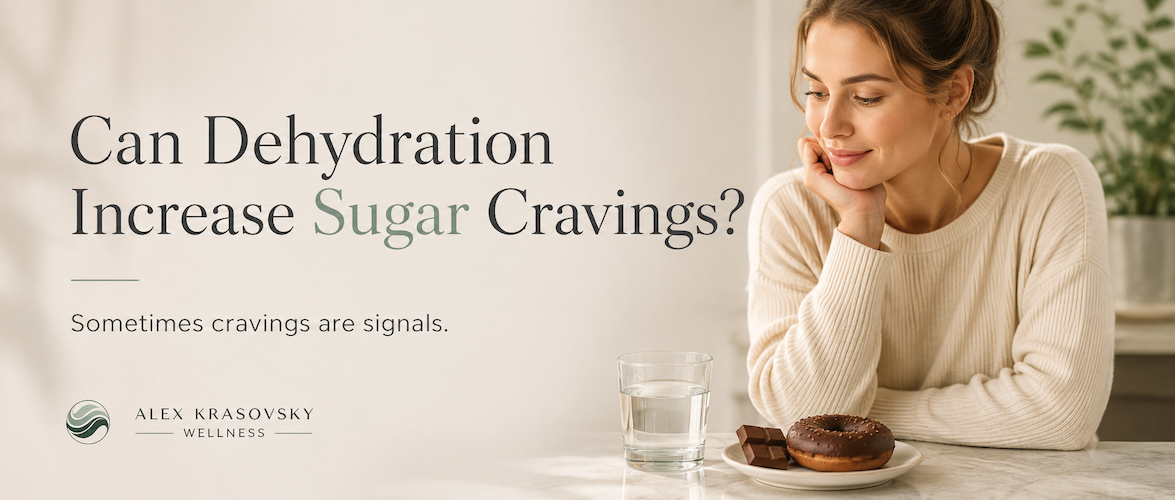
Craving sweets after meals is not always about weak willpower. Sometimes your body is trying to tell you something.
After you eat, your body needs fluid to support digestion. If hydration is low, digestion may feel heavier, and your body may start looking for fast energy or fast relief.
That is one reason you may want something sweet even when you are not truly hungry anymore. Cravings can also be connected to stress, sleep, blood sugar balance, habits, emotions, and meal quality. But hydration can be one piece of the bigger picture.
“Cravings are not always the enemy. Sometimes they are information.”
Does Drinking Water Help You Lose Weight?
A lot of people ask: does drinking water help you lose weight?
The honest answer is:
Water can support weight-loss habits, but water alone is not a weight-loss plan.
Better hydration may help you:
Understand the difference between thirst and hunger
Support digestion
Feel more steady during the day
Reduce the habit of snacking when your body needs something else
Replace sugary drinks
Build a better routine before meals
But if you are drinking more water and still feel bloated, tired, stuck, or full of cravings, you may need a more complete strategy.
“Water can support weight loss, but it cannot replace food habits, digestion, sleep, stress support, and consistency.”
That is why I teach hydration together with food habits, cravings, digestion, and weight-loss support inside my Group Detox & Weight Loss program.
Book a free consult if you want help understanding what your body may need next.
Best Time to Drink Water

The best time to drink water depends on your body.
Some people feel better drinking water in the morning.
Some feel better spreading it throughout the day.
Some do well drinking water before meals.
Some feel bloated when they drink too much with meals.
Some drink too late and wake up at night.
This is why I do not teach one strict hydration rule for everyone.
“The best hydration routine is the one your body can use and you can repeat.”
Drinking Water in the Morning
Drinking water in the morning can be a helpful habit because your body has gone several hours without fluid. For many people, it is a better first step than starting the day with coffee only.
Drinking Water Before Meals
Drinking water before meals may help some people feel more grounded and avoid confusing thirst with hunger. But the amount and timing matter. Too much water too close to meals may not feel good for everyone.
Drinking Water Before Bed
Drinking water before bed can help if you are truly thirsty. But drinking too much late at night may interrupt sleep. The smarter goal is usually to hydrate better earlier in the day.
How to Drink More Water Without Forcing It
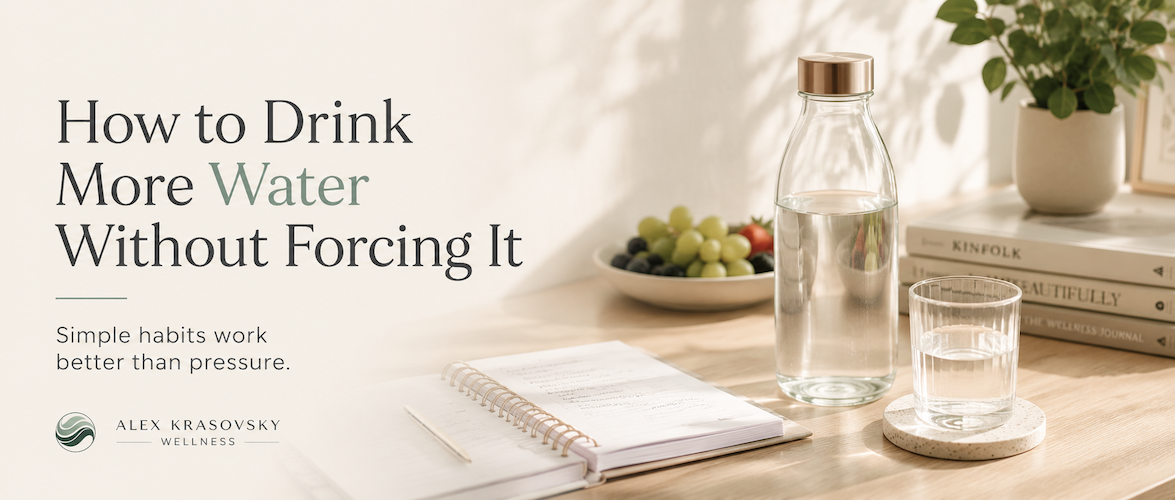
If you want to learn how to drink more water, start with awareness. Not pressure.
Notice your patterns:
Do you forget water until afternoon?
Do you drink coffee before water?
Do you crave sweets after meals?
Do you drink too much at night?
Do you feel bloated after drinking?
Do you feel dry even when you drink water?
These answers are more useful than blindly forcing a random number of ounces. Hydration should fit your body, not stress you out.
“Simple habits work better than pressure. Hydration should feel supportive, not like another rule you are failing.”
Benefits of Drinking Water
The benefits of drinking water may sound basic, but they matter.
Better hydration may support:
Energy
Digestion
Bowel movements
Focus
Skin appearance
Appetite awareness
Craving control
A more stable daily rhythm
And when hydration works together with better food choices, your body often feels more balanced. Healthy habits should feel realistic.
Not like punishment.
“A healthy lifestyle should not feel like constant restriction. It should feel like better choices you can actually live with.”
The Myth: If You Crave Sweets, You Just Need More Discipline
This is one of the biggest mistakes people make. They crave something sweet after a meal and immediately think:
“I have no willpower.”
“I ruined my diet.”
“I should not want this.”
But cravings are often signals. Your body may need:
Better hydration
More balanced meals
More protein
More fiber
Better sleep
Less stress
More minerals
A healthier dessert option
That is why we do not shame cravings. We help people make better choices.
“You do not need to fight your body. You need to understand what it is asking for.”
If you want something sweet, choose smarter. Browse Flèche Healthy Treats for sugar-free, gluten-free, dairy-free, low-carb desserts made for people who care about how they feel after eating.
How to Drink Water Correctly
People search for how to drink water correctly because the advice online is confusing.
Drink before meals.
Do not drink with meals.
Drink lemon water.
Drink a gallon.
Drink only when thirsty.
Drink first thing in the morning.
Do not drink before bed.
The truth is simple:
There is no perfect universal rule.
How to drink water correctly depends on your timing, minerals, digestion, coffee intake, activity, sleep, food choices, and body signals.
This is why I do not give all the details in a blog post.
Inside my Group Detox & Weight Loss program, I teach you how to build a hydration rhythm that fits your body and supports digestion, cravings, energy, and weight-loss goals.
“The goal is not to drink water perfectly. The goal is to learn what works for your body.”
A Simple Hydration Reframe
Instead of only asking how much water should I drink a day, ask:
Do I feel tired after meals?
Do I crave sweets when I am not hungry?
Do I drink too much water too late?
Do I rely on coffee more than water?
Do I feel bloated after drinking?
Do I feel dry even when I drink water?
Do I understand my body’s signals?
This is where things become personal. And this is where support can help.
“Better habits are easier when you do not feel deprived.”
Final Thoughts: Water Is Simple, But Your Body Is Not
Water matters. But your body is not simple.
Your hydration needs can change with food, stress, sleep, coffee, workouts, weather, digestion, and cravings. That is why generic advice often fails.
If you are asking how much water should I drink a day, that is a good place to start. But do not stop there.
Pay attention to your energy.
Pay attention to digestion.
Pay attention to cravings.
Pay attention to how you feel after meals.
And when you want dessert, choose something that supports the lifestyle you are building.
Shop Flèche Healthy Treats for sugar-free, gluten-free, dairy-free, low-carb desserts made for people who want better options without giving up pleasure. And if you want to learn how to drink water the right way for your body, cravings, digestion, and weight-loss goals, book a free consult for the Group Detox & Weight Loss program.
“Water is simple. Your body is not. That is why a personal strategy works better than generic advice.”
FAQs
-
Your needs depend on your body, food choices, fiber intake, activity level, coffee, sweating, and digestion. A general water intake calculator can give a starting point, but your body signals matter too. If you feel constipated, bloated, dry, or tired, your hydration routine may need more attention.
-
Drinking water can support weight-loss habits, but it is not a magic solution. It may help with appetite awareness, digestion, energy, and replacing sugary drinks. For real results, hydration works best with balanced meals, better food choices, sleep, movement, and a realistic routine.
-
Hydration supports the fluids your body uses for digestion, including saliva, stomach acid, enzymes, and intestinal movement. If you often feel heavy, bloated, or constipated, hydration may be one of the basics to look at, along with meal balance and gut health.
-
Dehydration is not the only reason for cravings, but it can be one factor. Sweet cravings after meals may also be connected to blood sugar balance, stress, sleep, habits, emotions, or not eating enough balanced food. Hydration is one helpful part of the bigger picture.
-
There is no perfect rule for everyone. How to drink water correctly depends on timing, minerals, digestion, coffee intake, activity, sleep, and your body’s signals. Inside my Group Detox & Weight Loss program, I teach clients how to build a hydration routine that fits their body.