Easy Sauerkraut Recipe (2 Ingredients, Probiotic)
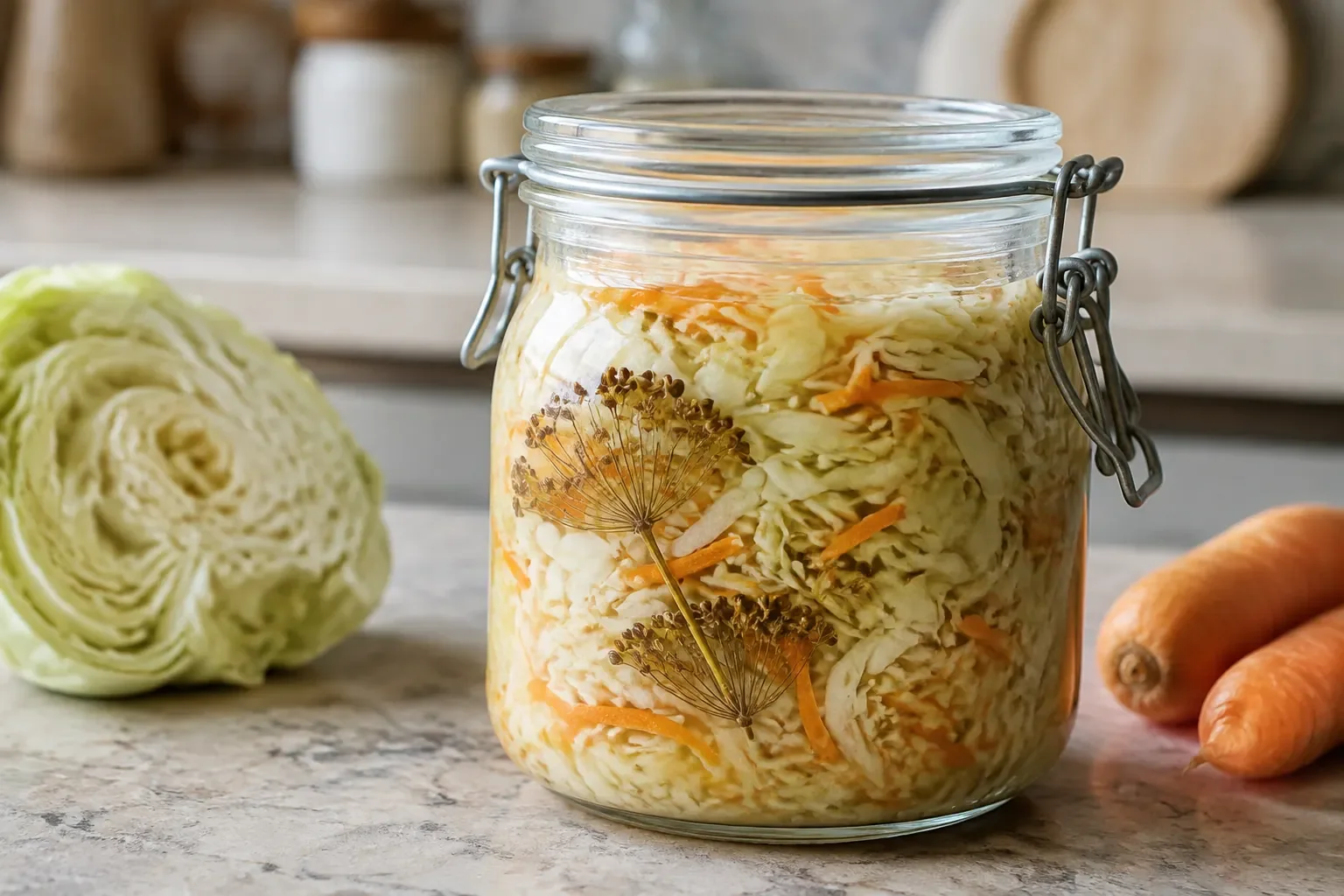
If you think homemade sauerkraut needs sugar, vinegar, a starter culture, or a shelf full of special equipment, it does not. The basic recipe is cabbage and salt. Time does the rest.
This is still a personal recipe for me. My mom fermented cabbage with carrots and dried dill seed heads, and that earthy dill smell takes me straight back to the kitchen I grew up in. I still make that version most often. Here, I have kept the same familiar flavor while giving you a clear, measured method you can repeat at home.
The result is crisp, pleasantly sour cabbage with no added sugar. You can keep the base simple or add the carrot and dill variation below. Either way, the most important details are not complicated: use the right amount of salt, keep the cabbage under its brine, give it a steady room temperature, and leave it for the full 72 hours.
This is my family's 72-hour method. It makes a young, lightly fermented sauerkraut with a crisp texture and mild tang. After 72 hours, it goes directly into the refrigerator. This recipe is not intended for canning or room-temperature storage.
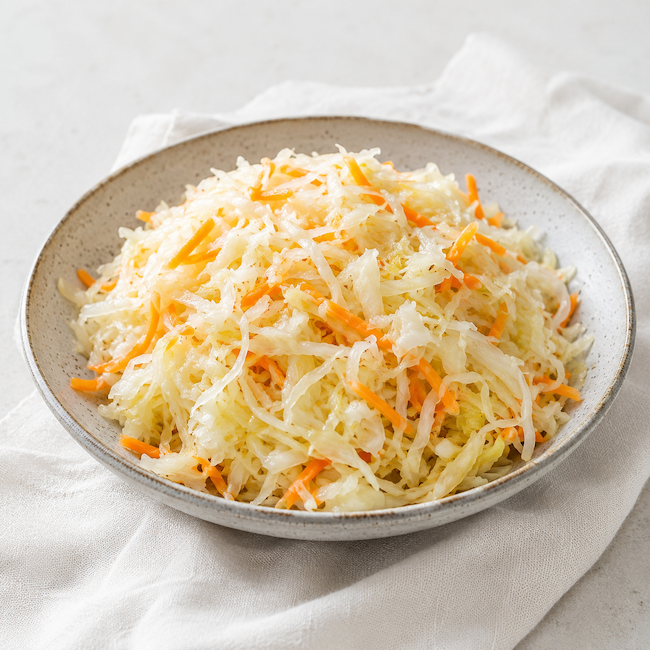
Homemade Sauerkraut at a Glance
Prep time: 20 minutes
Fermentation time: 72 hours at a cool room temperature, about 68-72°F
Yield: About 1 quart
Core ingredients: Cabbage and salt
Storage: Keep refrigerated after fermentation
Easy Homemade Sauerkraut Recipe Card
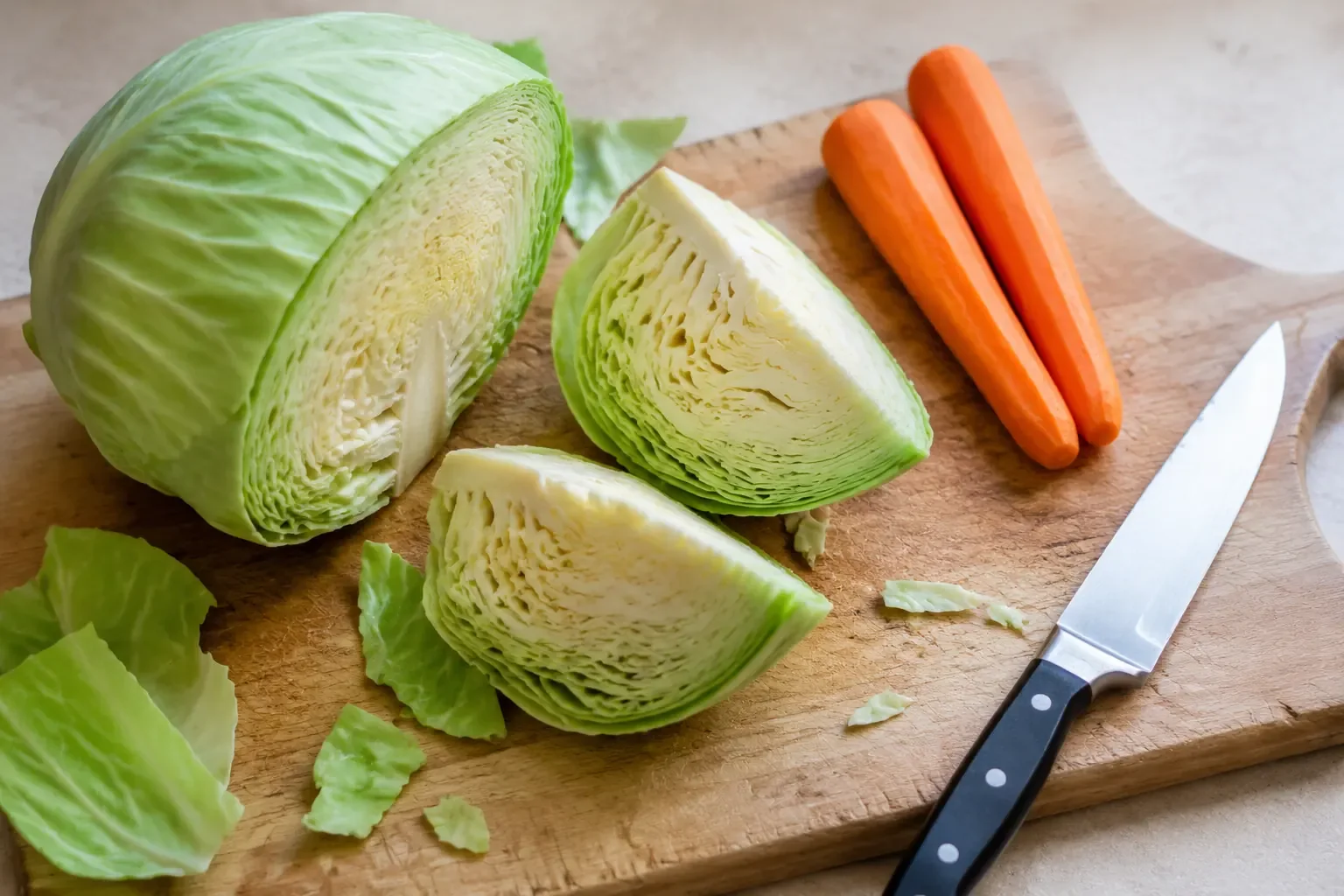
Ingredients
1 medium head of fresh white cabbage
2 medium carrots
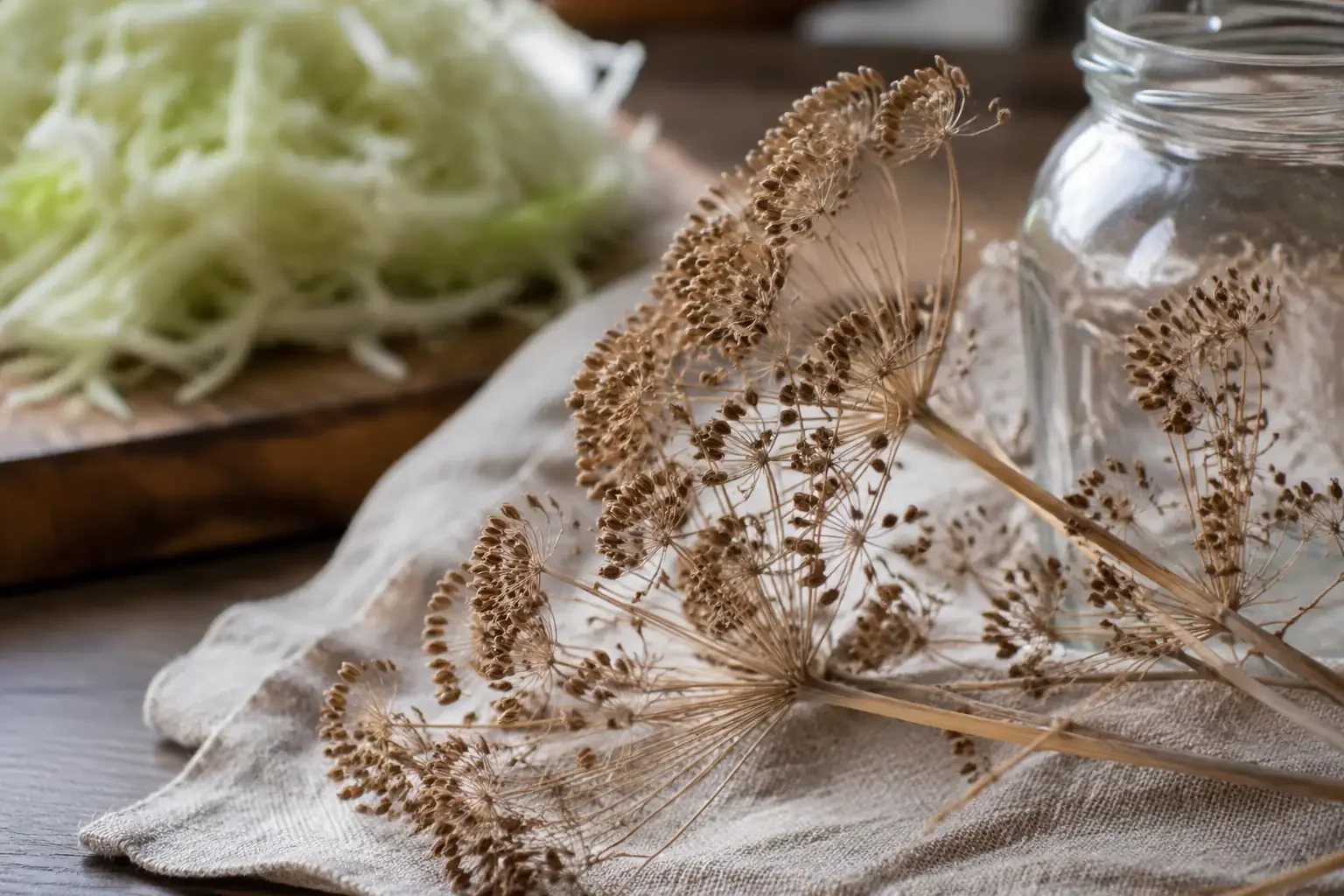
Dried mature dill with seed heads/umbrellas
60 g sea salt, divided
1 liter boiled water, cooled to room temperature
Optional Add-Ins
Instead of dill and carrots, you can also use:
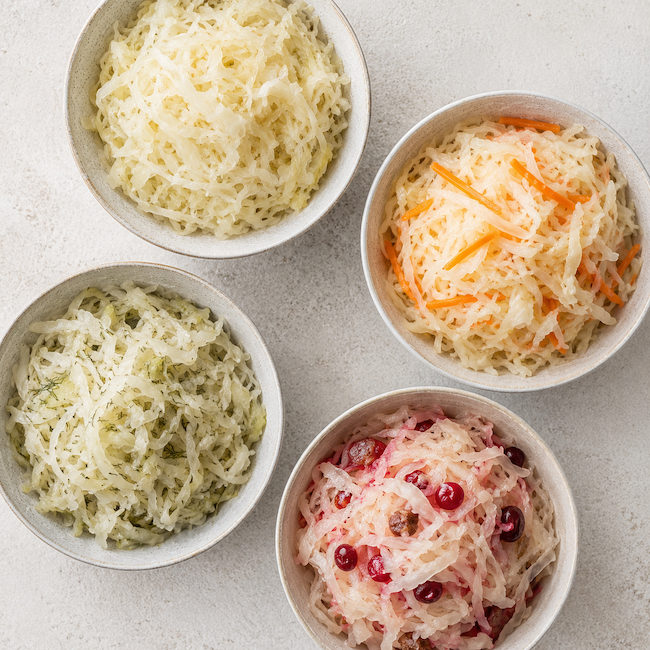
Cranberries
Green apples
Caraway seeds
Thyme
I personally love the dill version because it gives the sauerkraut that traditional homemade flavor I grew up with.
Alex's Carrot and Dill Variation
Use 2 lb / 900 g cabbage plus 3.5 oz / 100 g peeled carrot, for 2.2 lb / 1 kg total vegetables
Add 2 to 3 clean, dried mature dill seed heads
Keep the same 4 tsp / 22 g of salt because the total vegetable weight is still 2.2 lb / 1 kg. This is the version that tastes most like the sauerkraut my mom made. The carrot softens the sharp edge of the cabbage, and the dill adds a warm, old-style flavor without making the kraut taste like pickles.
Equipment
Digital kitchen scale
Large clean bowl
Sharp knife, mandoline, or cabbage shredder
Clean 1-quart glass jar or food-safe fermentation container
Fermentation weight
Airlock lid, or a standard lid that can be briefly loosened to release pressure
Small plate or tray to catch possible overflow
A glass jar is the easiest choice because you can see whether the vegetables are below the brine. Avoid reactive metal containers. Wash your jar, lid, weight, bowl, and tools well before you start, and rinse away all soap residue.
How to Make Sauerkraut: Step-by-Step
Weigh and shred the cabbage
Remove any damaged outer leaves, rinse the cabbage under cool running water, and remove the core. Do not scrub the cabbage. The naturally present microorganisms on the leaves help fermentation begin.
Weigh 2.2 lb / 1 kg of prepared cabbage. Slice it into thin, even ribbons. A fine shred softens sooner and packs tightly; a wider cut stays more substantial. I prefer a fine shred because it gives the finished sauerkraut a delicate texture without turning it soft.
If you are making the carrot version, use 2 lb / 900 g of prepared cabbage and 3.5 oz / 100 g of grated carrot. The combined weight should be 2.2 lb / 1 kg before you add the salt.
Add the correct amount of salt
Wash and peel the carrots. Grate them and add them to the bowl with the cabbage.
Pack the jar firmly
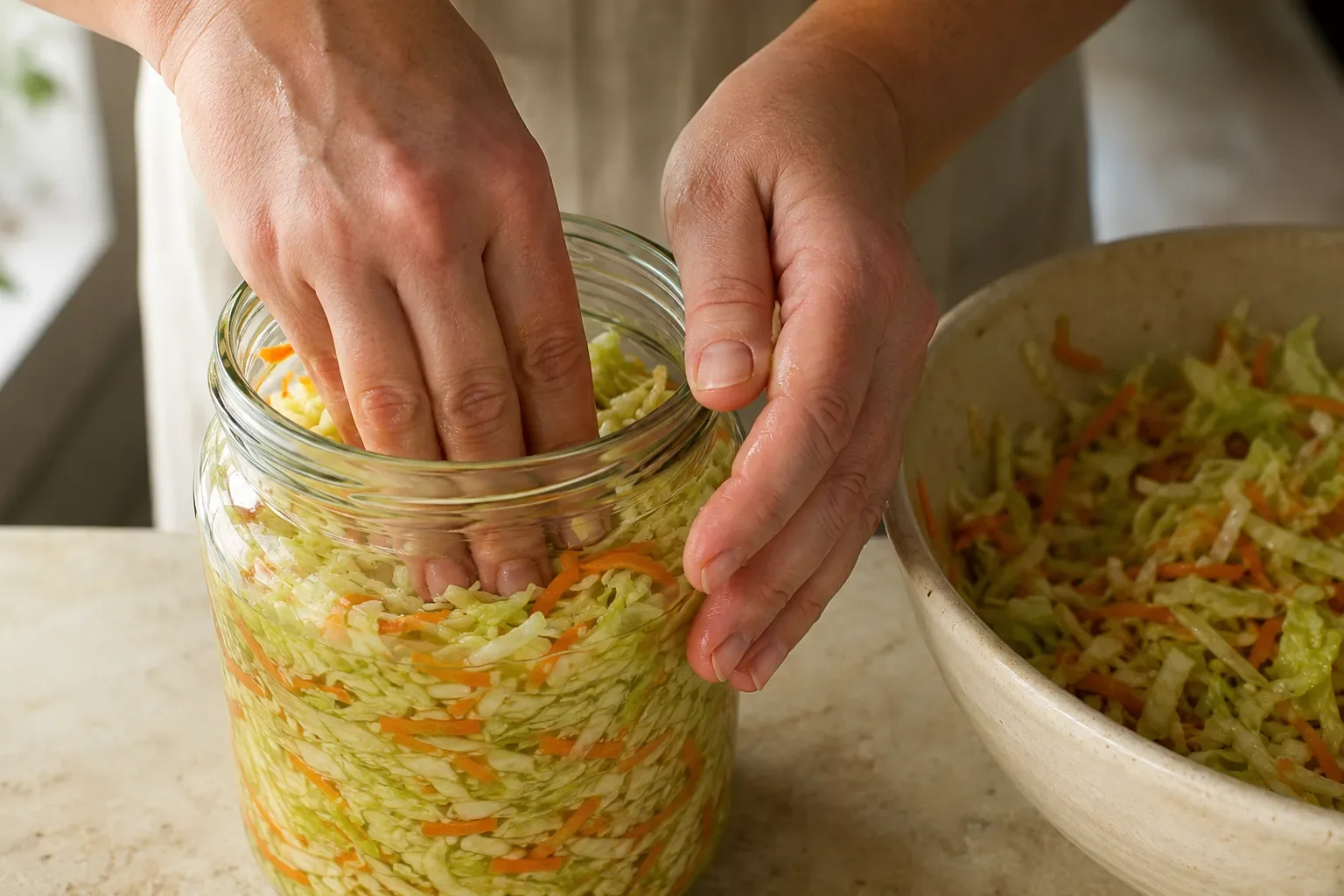
If you are using dill, place one seed head at the bottom of the jar. Add the cabbage a handful at a time and press it down firmly after each addition. Add another dill head halfway through and one near the top.
Pour in every drop of liquid left in the bowl. Pressing the cabbage removes large air pockets and helps the brine rise. Leave at least 1 to 2 in / 2.5 to 5 cm of space at the top of the jar because the contents can expand and bubble during active fermentation.
Keep the cabbage below the brine
Place a fermentation weight on top. The cabbage should sit below the liquid, with 1 to 2 in / 2.5 to 5 cm of brine over it when possible. This low-oxygen environment is one of the most important parts of a good ferment.
If the cabbage has not released enough liquid to cover itself after 24 hours, make a small amount of backup brine using 1½ tbsp / about 27 g canning or pickling salt per 1 qt / about 1 L of boiled and cooled water. Add only enough to cover the cabbage. Do not top it with plain water, which changes the salt balance.
Cover and ferment at a steady temperature
Fit the jar with an airlock lid and place it on a small tray in a dark area at about 68 to 72°F / 20 to 22°C. If you use a standard lid, keep it secured but not so tight that pressure cannot be released. Briefly loosen it when gas builds, then close it again. Do not leave the jar open.
There is no need to stir the cabbage every 12 hours. Stirring pulls oxygen into the jar and brings cabbage above the brine. Leave the weight in place, watch the liquid level, and make sure the vegetables remain submerged.
During the 72 hours, you may see small bubbles, a cloudy brine, and a little movement inside the jar. Those are common signs of active fermentation. The smell should be pleasantly sour and cabbage-like, not rotten or putrid.
Ferment for 72 hours
Leave the jar at a cool room temperature for exactly 72 hours. Check it about every 12 hours to make sure the cabbage is still under the brine. If you are using a standard lid instead of an airlock, briefly loosen the lid to release pressure, then close it again.
At the end of 72 hours, the cabbage should taste mildly sour, salty, and fresh, with some crunch. This is a short-fermented refrigerator version, so do not leave the finished jar at room temperature. If you see mold, feel a slimy texture, or smell a rotten or disagreeable odor, discard the batch without tasting it.
Some batches bubble more than others. A quiet jar is not automatically a failed jar. Freshness, shred thickness, and room temperature affect the activity. Judge the batch by submersion, a clean sour aroma, crisp texture, and the full 72-hour timing.
Refrigerate
After 72 hours, remove the dill seed heads if you prefer, transfer the cabbage to smaller clean jars if needed, and refrigerate it with the brine covering the vegetables. Cold storage slows fermentation, so the flavor will continue to change much more gradually.
Use clean utensils each time you take some from the jar. Keep the remaining cabbage below its liquid and close the lid promptly.
Why This Is a No-Added-Sugar Sauerkraut
You may see recipes that add sugar to speed fermentation or soften the sour flavor. It is not needed. Cabbage already contains natural carbohydrates, and the lactic acid bacteria use those carbohydrates during fermentation.
That does not make the finished food literally sugar-free. Cabbage and carrots naturally contain some carbohydrate. The accurate description is no added sugar sauerkraut: no white sugar, honey, maple syrup, or artificial sweetener goes into the jar.
This is also why vinegar is not part of the recipe. Vinegar can make cabbage taste sour, but traditional fermented sauerkraut develops its acidity through fermentation. The taste is rounder and more complex than quick-pickled cabbage.
Is Sauerkraut Good for You? The Real Sauerkraut Benefits
Sauerkraut can be a useful part of a balanced way of eating, but it is not a cure and it does not "detox" the body. The practical benefits are much simpler.
It turns cabbage into an easy, ready-to-eat side
Cabbage provides fiber and naturally occurring nutrients. Fermentation gives it a sharp flavor and longer refrigerated life, which can make it easier to add vegetables to ordinary meals. A spoonful beside eggs, fish, chicken, potatoes, or a grain bowl takes almost no preparation.
Raw fermented sauerkraut may contain live microorganisms
Unpasteurized sauerkraut that has not been cooked can contain live microorganisms created and selected during fermentation. That is why people often call it probiotic sauerkraut. The more exact answer is that a fermented food may contain live cultures, but not every jar has been tested for specific strains or proven health effects.
Probiotic effects are strain-specific, and research does not support treating every fermented food as if it produces the same result in every person. I prefer to keep the claim modest: homemade, raw sauerkraut is one way to add a traditionally fermented food to your meals.
Its strong flavor can make a simple meal feel complete
Sour and salty foods add contrast. A small serving can brighten richer foods and make basic protein and vegetables more satisfying. That matters in real life. A supportive eating pattern does not need to feel bland or overly controlled.
There are a few cautions
Sauerkraut can be high in sodium, so portion size matters if you have been told to limit salt. Fermented foods can also cause gas or bloating for some people, especially when they eat a large portion right away. Start with 1 to 2 tbsp / about 15 to 30 g and notice how you feel.
If you are severely immunocompromised, pregnant and concerned about unpasteurized foods, or managing a condition that requires a restricted diet, ask your medical professional what is appropriate for you. Food can support health, but it should not be presented as a replacement for medical care.
What Does Sauerkraut Taste Like?
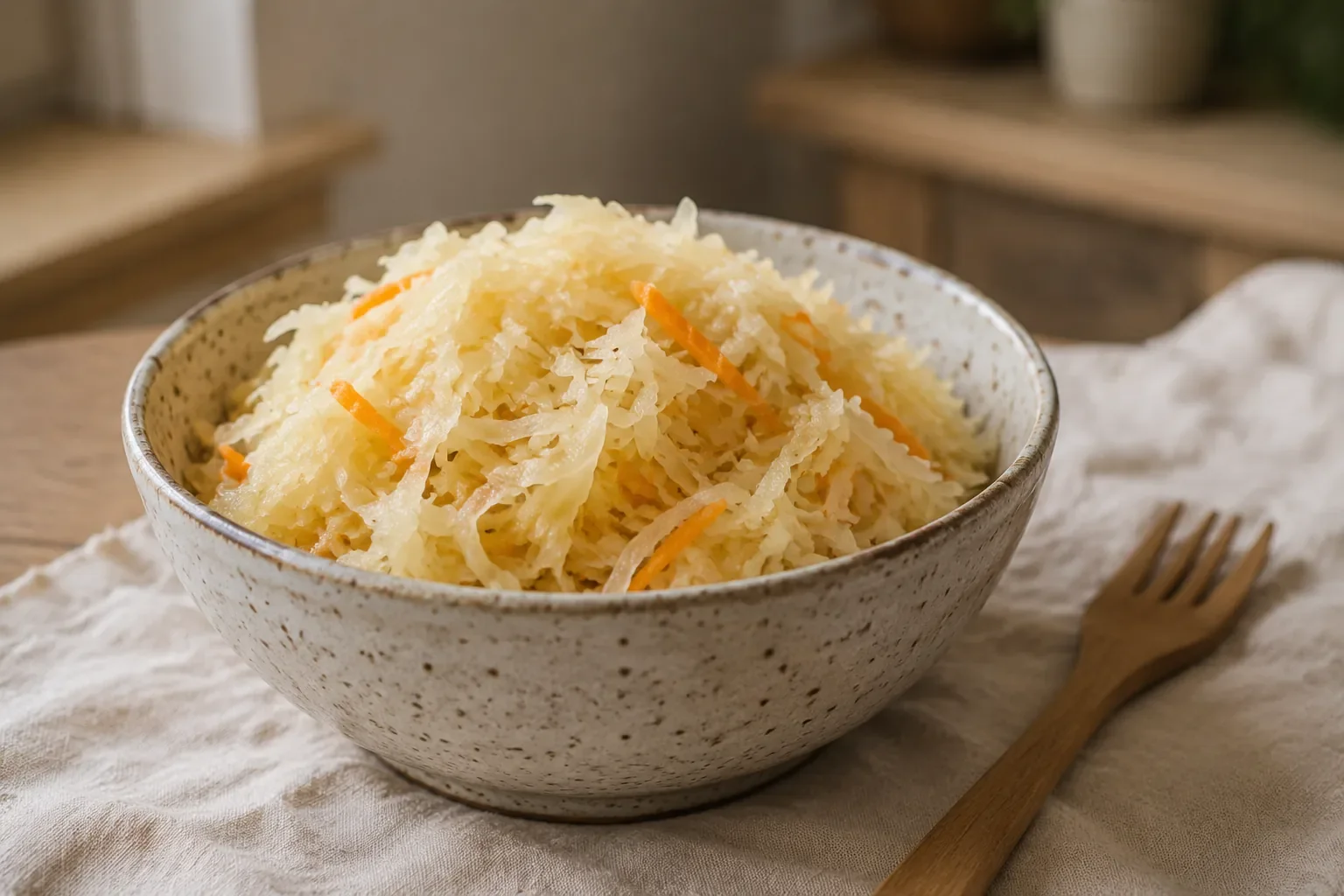
Good fermented sauerkraut tastes clean, sour, salty, and slightly earthy. The texture should have some crunch. It should not taste sweet like vinegar slaw, and it should not smell rotten.
The flavor changes with time. Early in fermentation, the cabbage is crisp and quite salty. As it continues, the sourness becomes stronger and the raw-cabbage edge fades. Carrot adds a mild sweetness. Dill seed heads make the flavor more herbal and traditional without covering the cabbage.
If the jar is too sour for you, use a smaller portion with a meal instead of rinsing the entire batch. Rinsing removes some salt and acidity, but it also washes away flavor. You can rinse only the amount you plan to eat.
What to Eat With Sauerkraut
You do not need a special "fermented food meal." Think of sauerkraut as a sharp, crunchy side or condiment. A little can be enough.
Serve 1 to 2 tbsp / about 15 to 30 g beside eggs and roasted potatoes.
Add it to a bowl with chicken, salmon, lentils, or another protein.
Layer it into a turkey or grilled vegetable sandwich after cooking.
Use it on sausages or burgers instead of a sweet relish.
Mix a small amount into a cabbage, cucumber, or beet salad.
Add it to soup or stew at the table, after the food has cooled slightly.
Pair it with avocado, olive oil, nuts, or another source of fat to round out a simple meal.
If keeping live cultures is your priority, do not cook the portion you plan to eat. Add it after cooking or serve it cold on the side.
Common Fermentation Problems
The cabbage is floating
Loose shreds above the brine are exposed to oxygen and are more likely to grow mold. Press the cabbage back down with a clean utensil, reposition the weight, and make sure the liquid covers the vegetables. A small piece of cabbage leaf placed under the weight can help hold fine shreds in place.
There is not enough brine
First, give the salted cabbage more time and press it firmly. Fresh cabbage often releases plenty of liquid after resting. If it still is not covered after 24 hours, add only enough properly salted backup brine to cover it.
The brine looks cloudy
Cloudiness and sediment can be normal during active fermentation. Judge the batch by the full picture: the vegetables stayed submerged, the temperature was appropriate, and the smell is clean and sour.
There is mold, slime, or a bad odor
Do not taste it. Discard the batch if you see mold, feel a slimy texture, or smell a disagreeable or rotten odor. It is frustrating to lose a jar, but tasting questionable fermented food is not worth the risk.
The sauerkraut is too salty
Do not dilute the whole ferment while it is active. Salt is part of the process. When you serve it, rinse a small portion briefly in cool water and drain it well. Next time, weigh and measure carefully rather than estimating.
A Simple Way to Begin
Fermentation can sound technical until you make one jar. Then it becomes a quiet kitchen habit: cabbage, salt, a clean jar, and a little attention. Start with the plain two-ingredient batch if you want to learn what the process looks and smells like. Add carrot and dried dill when you want the version that feels more like mine.
If digestion, bloating, low energy, or sugar cravings are making food feel confusing, one fermented food will not solve the whole pattern. It can still be a useful part of a realistic plan. At Alex Krasovsky Wellness, the focus is on real meals, clear structure, and changes you can actually repeat.
Schedule a free first call if you want help understanding what may be keeping you stuck and what to focus on first.
Sources and Food-Safety Notes
The cabbage-to-salt proportion and basic fermentation practices are informed by theNational Center for Home Food Preservation sauerkraut recipe. The recommendations to keep produce submerged, maintain a cool room temperature, and refrigerate fermented vegetables are supported by the University of Minnesota Extension fermentation guide. The 72-hour timing is Alex's family method and produces a young, short-fermented refrigerator sauerkraut; tested recipes for fully fermented sauerkraut generally use a longer fermentation. The health language follows the National Institutes of Health overview of probiotics.
FAQ
-
Yes. Pack it in a freezer-safe container and leave room for expansion. Freezing stops fermentation and may soften the texture after thawing. If you mainly use sauerkraut in cooked dishes, the texture change may not matter. Refrigeration is usually the better choice when you want it crisp and plan to eat it raw.
-
High heat kills beneficial Lactobacillus bacteria, so cooking or canning greatly reduces the live cultures in fermented sauerkraut. If live microorganisms are the reason you are eating it, serve it cold or stir it into food after cooking. Cooked sauerkraut can still provide flavor, fiber, and nutrients; it simply is not the same as eating it raw and unpasteurized.
-
Yes. Because this version ferments for only 72 hours, keep it refrigerated, tightly covered, and under its brine, and use it promptly. Use a clean utensil each time. Discard it without tasting if you see mold, notice a slimy texture, or smell a rotten or disagreeable odor.
-
It tastes mildly sour, salty, and slightly earthy, with a clean fermented aroma and some crunch. The 72-hour ferment stays fresher and less tangy than a long-fermented sauerkraut. Carrot brings gentle sweetness, while dried dill seed heads add a warm herbal flavor.
-
Serve a small portion with eggs, potatoes, chicken, fish, sausage, lentils, sandwiches, salads, or grain bowls. It works anywhere a sharp, crunchy condiment would balance a richer or milder food. To preserve live cultures, add it after cooking rather than heating it in the dish.
-
This recipe ferments for exactly 72 hours at a cool room temperature: 68 to 72°F / 20 to 22°C. Keep the cabbage submerged throughout the process, briefly release pressure if you are not using an airlock, and refrigerate the sauerkraut as soon as the 72 hours are complete.